Another 1000 African Gray parrots were discovered earlier this month in crates about to leave the airport in Cameroon for transport to Bahrain and the Middle East. This is
the second illegal shipment of these parrots intercepted in two months in Cameroon. The total number of birds discovered numbers over 1500 between the shipments – all sent to Limbe Wildlife Refuge for rehabilitation. The birds who are alive and who are able to be released will be. Many have already died from being crushed or glued or just general rough handling and fear during the “shipment.”
These are all wild caught birds of the endangered species variety. They are CITES II which means trade in them is restricted because their populations in the wild are so low that they cannot sustain any trade. I spoke with Dr. Irene Pepperberg of The Alex Foundation who has done the seminal work on the intelligence of African Grey Parrots. She told me that when there is this high a number of birds being poached, it means
there are a number of large flocks from which the adults are taken. Stripped of their teaching population, the younger birds remaining in these substantially decreased flocks are left trying to learn to survive in the wild on their own and it makes these diminished flocks extremely vulnerable. If any of the birds that eventually are released are young, they have an equally challenging situation in that they also need adult birds who will teach them how to survive. But in this case it’s even trickier because these unrelated birds being released will need to know to search out and find adults who are willing to teach them. Add to this the fact that, according to research done by Dr. Pepperberg over a 30 year project, African Grey parrots have an emotional equivalent of a 2-3 human child and the intelligence of a 5-6 year old human child, and seeing these birds tightly crammed in baskets and crates is even more heartbreaking.
Limbe is charged with caring for over 1000 parrots right now – a financial and time burden they never expected. The best way to stop these kinds of killing shipments is to end the market for wild caught birds. It can start with each of us. Triple check your desire for an exotic bird before buying one. Make sure you are prepared for the commitment. It can be up to 80 years of commitment and you can expect your life to change dramatically to accommodate the bird – you cannot reasonably expect the bird to accommodate your lifestyle and still have any kind of satisfying life for either of you. If you still must get one, then be absolutely certain the bird was domestically bred and raised and there are several generations of domestically bred and raised birds in his or her lineage. Wild birds make terrible pets anyway. Those domestically bred and hand raised are more accustomed to human interaction and there is generally less aggression than with a wild caught bird. We can avoid unwittingly aiding and abetting the poaching of exotic birds by shrinking the market for them. The birds are much happier when they remain in the wild. And, it would be a travesty for a regal bird like the African Grey to disappear because of his ornamental value in the pet trade.
Photo credits: Limbe Wildlife Refuge


we help birds brave the winter onslaught of freezing temperatures and battering snow?
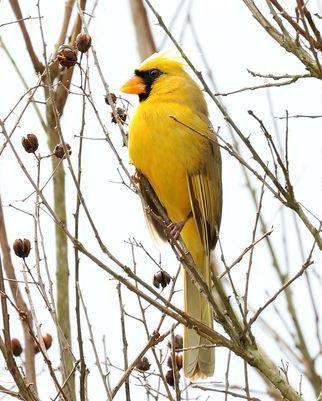
eclipsed by no other bird in our garden; in the fall, even with a color change he is still quite the beauty. This morning he has been frequenting the wisteria behind our home and he looks so great mixed in with the changing leaves. Known to us as Senor Cardinal for his haughty elegance, his female companion possesses none of the patience nor self-confidence he does. She flits from branch to branch in a constant state of chirping frenzy – even with their baby having fledged long ago and no longer needing constant care. Her agitated state has ratcheted down from when the baby was fledging, but she still is one of the most excitable birds in the garden – and very difficult to get a photo of as she is a moving target. So, here is an early December homage to Senor Cardinal – sporting his ever-so-slightly diminished fall coloring. In the snow he is a standout….can’t wait!
appears to give no benefit to flight which is key to how we think about hummingbird aerodynamics.
right? But, the times they are a changing. Now researchers from the University of Washington have discovered that there are some birds who make a stop in Mexico on the way down south, not to rest and molt, but to start a second family for the season. Known as “migratory double breeding”, this is the first instance of it in the new World, and the first time it has been documented anywhere in a southerly migration. The species researchers discovered taking part in this were Yellow-billed cuckoos, Orchard orioles, Hooded orioles, Yellow-breasted chats and Cassin’s vireos.
According to a recent survey from the RSPB published on the
Nature configures itself in interesting ways that have meaning and speak to us where we are. So it was for Jarbas Agnelli, a Brazilian musician, who saw music in the pattern of birds on wires. Letting the visual pattern the birds made on the wires be the notes, the outcome of this one photo frame of resting birds is a flight of music to anyone’s ears.
The storms this week that brought rain and cooler weather also brought a lot of migratory birds into our city garden. Today was a busy day in the early afternoon for about an hour when one bird after another came to grab some food and a drink from
our fountain. At one point the fountain had an avian traffic jam with a Robin, several Catbirds, a Hermit Thrush and three Cardinals (I believe our Cardinal family from this year), all trying to get their space at the watering hole. At one point we saw a Towhee, and that is when I got out the camera. I got out my iPhone and brought up my
birds during migration if for no other reason than sometimes there are huge numbers of them. I was in Panama several seasons ago and the hawks were kettling as of thousands of them flowed into a tight formation to stay over land, battling for space over the isthmus of Panama. It’s like when the
superhighway suddenly loses a lane and all the cars back up because they have to change the traffic flow to accommodate fewer lanes. And it is a boon to hawk watchers.
identifications.
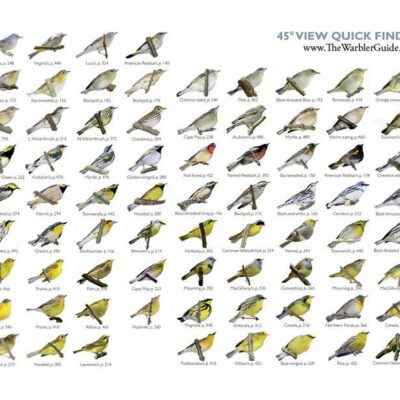
If I am still not sure at that point, even though I probably have it narrowed down to only one or two, then I touch the information icon on the app on the birds in question so I can see the text. Sometimes there is identifying information in there that is not quickly visible in the image.
for birds of prey.