Do you ever wonder where birds sleep? On a cold winter night, when the wind is blowing the snow sideways across the light of your street lamps, the chickadees that visited your feeder in the morning are huddling close together. Hopefully they have found a decent cavity to roost in. If your neighborhood is like mine, a dead tree is considered a hazard and is quickly removed to prevent damage to houses. The valuable cavities in a dead tree are eliminated in most urban and suburban areas where dead trees are not allowed to stand.
What can you do for the local birds that are looking for a place out of the frigid cold? Consider a roost box. While a nest box is flat inside and provides room for a nest, a roost box has a series of pegs that serve as perches with a roof overhead. Roost boxes are designed to provide a simple shelter for birds where they can sleep together with some relief from the cold and use their collective body heat to keep warm. Roost boxes often look very similar to nest boxes. Different size entrance holes provide shelter for different types of birds. A smaller hole invites smaller birds, such
as sparrows, nuthatches and titmice, while a larger hold can accommodate flickers and small hawks. Smaller birds loose body heat very fast, but in a roost they can keep each other warm by staying close together.
Owls can use the same box they nested in as a roost box in winter. Other birds, such as chickadees, can roost in a PVC pipe roost that you can easily make yourself. Click on the picture for simple instructions on how to build a chickadee roost.
Here is a great website from Audubon Society of Omaha that provides instructions for those of you who would really like to build your own roost boxes, and nest boxes too.
While a bird feeder may provide the wintering birds with food, they also need shelter to make it
through the winter. Roost boxes can help attract more birds to your area, and can keep them warm and safe through the cold nights.
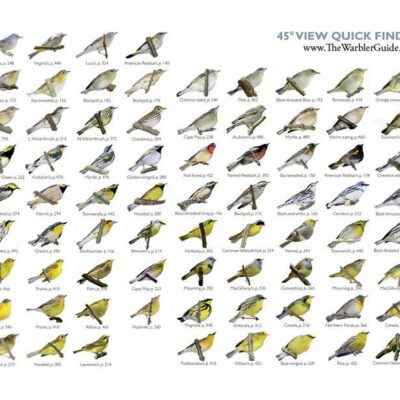
If you want help identifying the birds around your backyard, check out Peterson Field Guide to Backyard Birds 2.0 for iPhone and iTouch. All the great illustrations and information available in the original Peterson Field Guide book, but adapted for your iPhone or iPod touch. It’s easy and fun to use, and it can help improve your birding skills, no matter what level you are at. With a roost box in your yard and Peterson for iPhone to help identify your backyard birds, you’ll enjoy a winter of birding.
|
A White-crowned Sparrow could find shelter in your roost box Photo credit: Stan Tekiela |

we help birds brave the winter onslaught of freezing temperatures and battering snow?
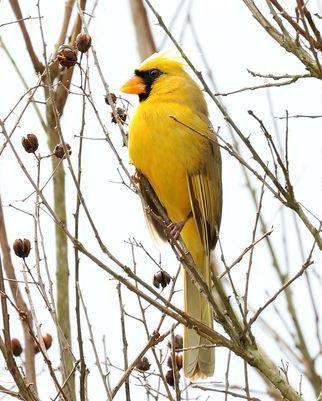
eclipsed by no other bird in our garden; in the fall, even with a color change he is still quite the beauty. This morning he has been frequenting the wisteria behind our home and he looks so great mixed in with the changing leaves. Known to us as Senor Cardinal for his haughty elegance, his female companion possesses none of the patience nor self-confidence he does. She flits from branch to branch in a constant state of chirping frenzy – even with their baby having fledged long ago and no longer needing constant care. Her agitated state has ratcheted down from when the baby was fledging, but she still is one of the most excitable birds in the garden – and very difficult to get a photo of as she is a moving target. So, here is an early December homage to Senor Cardinal – sporting his ever-so-slightly diminished fall coloring. In the snow he is a standout….can’t wait!
According to a recent survey from the RSPB published on the
Nature configures itself in interesting ways that have meaning and speak to us where we are. So it was for Jarbas Agnelli, a Brazilian musician, who saw music in the pattern of birds on wires. Letting the visual pattern the birds made on the wires be the notes, the outcome of this one photo frame of resting birds is a flight of music to anyone’s ears.
The storms this week that brought rain and cooler weather also brought a lot of migratory birds into our city garden. Today was a busy day in the early afternoon for about an hour when one bird after another came to grab some food and a drink from
our fountain. At one point the fountain had an avian traffic jam with a Robin, several Catbirds, a Hermit Thrush and three Cardinals (I believe our Cardinal family from this year), all trying to get their space at the watering hole. At one point we saw a Towhee, and that is when I got out the camera. I got out my iPhone and brought up my